


A curated, source-linked guide to videos people made with Claude Opus 5.5. It focuses on what the model actually did: writing rendering code, directing external models, editing supplied footage, or building an app that someone recorded. This is an independent project, not affiliated with Anthropic or X. We use Hypit to inspect accessible video previews.
- Browse by picture: open the 168-case visual directory; every reviewed case has a small frame from its sampled X preview.
- Explore the grid: use the domain × visual-style atlas to compare cell counts and open pictured cases, with dated engagement observations.
- Compare palettes within each category: the color-mode study includes 53 mode palettes, per-video measurements and a cautious look at likes.
- Compare evidence: read 14 paired cases across seven production paths and the reproducible statistical profile.
- Find the latest additions: read seven cases published after the frozen search cutoff.
- Choose a production route: use the visual-effects production guide to match a task with tools, inputs, checks, and likely limits.
Refresh: X searches ran through September 26, 2026, 21:05 China Standard Time; this snapshot was reconciled at 21:53. Across 56 recorded queries, 55 succeeded and one query had been rate-limited in an earlier batch. The corpus has 1,511 unique candidate posts, 1,419 with MP4, and 1,449 attachments. Hypit 0.2.3 probed and sampled nine frames from all 1,449; SHA-256 found 1,401 distinct files. We reviewed 168 source-linked cases. Search limits, reposts, and unrelated results mean these numbers are not a count of original Opus videos or all of X. See the search receipts summary and frozen snapshot.

Refresh, Sep 26 2026: a vision model (Gemini 3.8 Flash) classified the nine-frame samples and post text for all 1,401 byte-distinct MP4s. It labeled 980 “yes” and 139 “likely” for Opus involvement. Those 1,119 labels are classifier judgments, not verified authorship; one label per video can also miss mixed domains or styles. The classifier sorts by topic and look. It does not predict virality. Data:
data/domain-style.csv.

The domain chart counts only the 1,119 files tagged yes or likely, with one primary domain per file. The same files produce this style chart; the largest two primary styles are motion graphics / UI (350) and 3D render (324).

A single average palette hides within-category differences. Nine frames from each of the 1,119 distinct preview files show two or three color modes in 11 of 13 styles. Motion graphics/UI, for example, splits into 198 dark-neutral and 152 light-neutral files. See the color-mode study for the four-category figure, full style/domain atlases, methods and downloadable numbers. Likes were not used to form the modes, and only 20 of 53 modes have at least five exact September 27 like observations.
Domain and style meet in this complete cross-tab. Each number is a file count, not a number of independent creators or verified Opus runs. Empty squares mean zero in the retrieved sample. Open the domain × visual-style atlas for a table whose populated cells lead to pictured cases and original posts. Its case choices use a separate September 27 X-page engagement refresh; likes and post views are dated observations, not final totals or production-quality scores.
The engagement refresh obtained both exact likes and exact post views for 166 of 168 reviewed posts; two pages remained unverifiable. The readings span 11:50–12:32 UTC on September 27, so case picks compare observations from different moments.

In this retrieved file sample, games × 3D render (161) and ads × motion/UI (154) together account for 315 of the 1,119 yes/likely files (28.2%). This describes where the sample clusters, not the share of all Opus videos on X.
Classifier-threshold check: among yes files only, ads and launches (191) narrowly exceed games and interactive demos (187). Adding likely reverses that order to games (230) and ads (215). The lead depends on the classifier threshold, not a measured change in what people made. The reproducible statistical profile shows denominators, durations, and cross-tabs.

Each dot is a median and each thick line spans the 25th–75th percentiles of accessible X previews. The 168 source-post cases were deliberately selected for review; this chart does not measure production time, model speed, or path success.
Among these reviewed cases, educational explainers have the longest median preview at 102.28 seconds; the other six path medians range from 24.76 to 51.79 seconds. This comparison concerns preview lengths within the selected cases, not a general advantage of one production path.
One highly engaged Top result on Western civilization was byte-identical to a later repost captioned as an Opus 5.5 video, while the earlier post only says “Claude.” We kept both posts in the candidate corpus but left the video out of the reviewed Opus case index because the original model version is unclear. Engagement is not evidence of authorship.
Each picture links to the creator's original post. These are deliberately chosen examples, not the most common or highest-quality outcomes. The 14 paired evidence cases show why a similar look can come from different inputs and tools; the 168-case visual directory shows one sampled frame for every reviewed case.
| Production path | Watch an example | What to check |
|---|---|---|
| Code-drawn 2D |  Ant colony and matching source |
Does the public code match the scenes, timing, and assets? |
| Educational explainer | 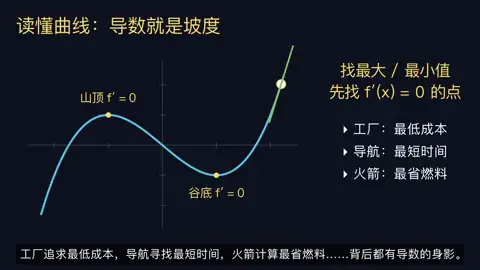 Manim calculus lesson |
Were the facts, formulas, narration, and supplied material checked? |
| 3D or real-time graphics |  Clearwater and WebGL source |
Is this a program capture, a rendered scene, or video-model output? |
| Existing-source transformation |  Talking-head line-art remake |
What did the supplied performance, audio, or product files contribute? |
| External video-model pipeline |  Opus plus Seedance |
Which tool supplied the moving pixels, and what did Opus direct? |
| App or game capture | 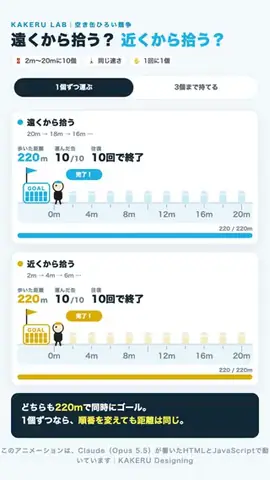 Can-collection simulation |
Is the deliverable a playable program, with video as its recording? |
| Mixed or not established | 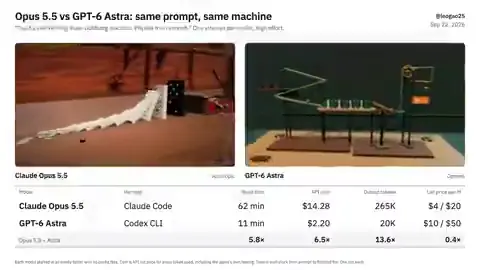 Two-model physics comparison |
Are the inputs, budgets, and scoring procedure comparable? |
Anthropic's Opus 5.5 model description specifies text and image input with text output. A video can instead come from code it wrote, a program it controlled, existing footage it edited, or another model it directed. A frame alone cannot prove the production path. We distinguish creator disclosures, publicly matching projects or prompts, and direct observations of sampled X previews. The production guide explains suitable tasks and checks as engineering advice, not measured model success rates.
| Preview and project | What can be reused and what the preview shows |
|---|---|
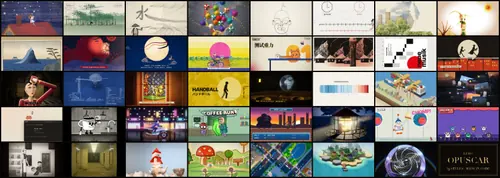 Lemo-Opuscar · original post |
The official cover previews a gallery of 39 styles, each with sample films and STYLE.md links. The director guide, technique guide, and sample scene code make the brief, storyboard, deterministic frame rendering, shared timing, and sound checks inspectable. The creator says Canvas/WebGL code draws the films without a video-generation model; the repository alone cannot audit every model call or finished film. Its license assigns MIT to code and CC BY 4.0 to guides, style files, and films, subject to third-party asset terms. |
 Papermotion |
A reusable paper-cut animation engine with deterministic physics, character rigs, offline rendering, frame grabs, contact sheets, and sound checks. The still comes from its snow film, which the README labels Opus 5.5. The README also labels demo, rooftops, and sea Opus 5.5; light and embers are labeled GPT 6 Astra. Read each sample's model label separately. |
 ClaudeAnimationBase · creator example |
A public p5.js and p5.brush animation starter with character expressions, storyboard and contact-sheet steps, and a render workflow. The preview shows @servasyy's personal-story film made with this base; the public starter is reusable input, not the exact source for every shot in the finished film. |
 Motion Graphics Music Video skill · creator example |
A Claude Code plugin and Ruby toolkit for planning and assembling music-video motion graphics from a supplied song and brief. Its p5.js workflow can call external Fal image, video, and audio models; the preview is a multi-tool creator example, not evidence that Opus supplied all moving pixels. |
These resources were checked on September 27, 2026. The two creator examples above are also described on the new-case evidence page. All four resources sit outside the September 26 frozen corpus and do not increase the 1,401-file or 168-case counts. Preview-image provenance and rights are recorded in THIRD_PARTY.md.
Seven creator posts published after September 26, 21:05 China Standard Time have a separate dated evidence page, each with a sampled-frame preview and a note on what remains unverified. They are outside the 1,401-file / 168-case snapshot. Three useful starting points:
| Frame and original post | Why this case matters |
|---|---|
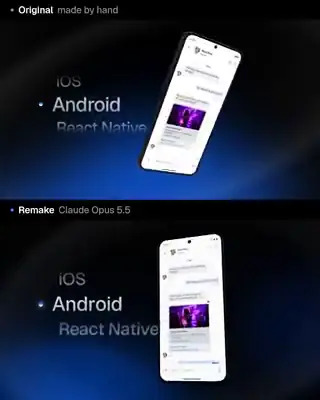 Handmade launch film versus code remake |
The creator supplied the original film and Figma files, then revised the remake's pacing. The comparison makes those inputs visible. |
Personal story using ClaudeAnimationBase |
A reusable open-source animation base and autobiographical material are part of the production path. |
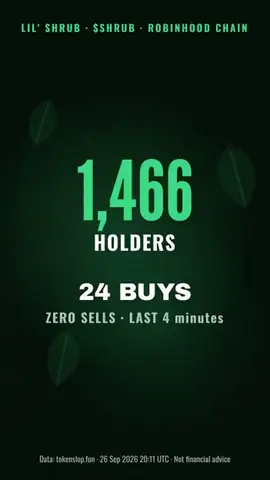 Video with checked data slots |
The creator describes a guard that prevents the model from inventing on-screen figures; the guard's code is not public. |
The September 25–26 additions remain in the visual case directory, with all 168 reviewed original posts and one frame each.
The case index and field definitions cover all 168 reviewed examples.
Read the full Chinese research report, Article version, prompt/workflow matrix, and reusable prompt templates.
The search coverage, media profile, methodology, and frozen counts explain the collection boundaries.
The original X MP4s, raw search results, private paths, and nine-frame contact sheets are not distributed here. Small single-frame previews link to the creators' posts and remain the creators' material; they are outside this repository's CC BY license. Case notes distinguish creator disclosures from what Hypit independently observed. Nine sampled frames cannot establish full-motion quality, audio quality, knowledge accuracy, hidden model calls, or the highest-resolution master.
See CONTRIBUTING.md to propose a new original post or reusable production project, improve a source link, or correct a workflow classification. The original annotations, writing, and diagrams in this repository are offered under CC BY 4.0; the linked X posts, videos, music, creator prompts, and external projects remain with their respective rightsholders. See THIRD_PARTY.md.